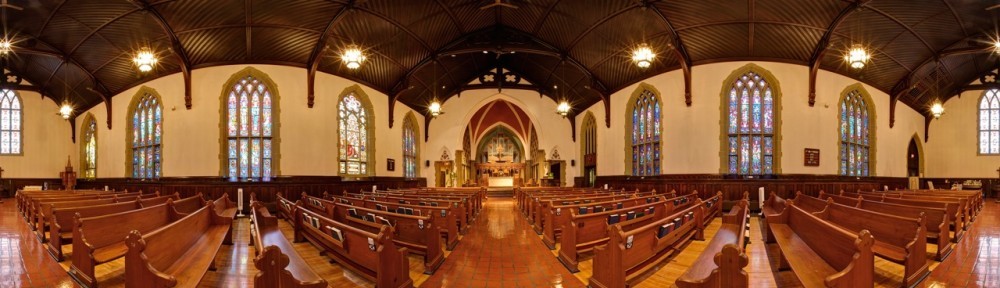
Call for Papers: Conference on “The Ahmadiyya Muslim community In Scholarly Perspective” May 23-23, 2019

Venue: Faculty of Comparative Study of Religion and Humanism (FVG) Bist 164 – B-2610 Wilrijk-Antwerpen. Belgium. Tel.: +32 (0)3 830 51 58.

We are interested in organizing a conference on the Ahmadis and Ahmadiyya in which the speakers examine

  • Its theology- Christology
  • Its history,
  • Its organization, governance and associated groups,
  • Membership: numbers, growth, sociological profile. International expansion,
  • Iconography,
  • Their original territories and their international developments, as well as their various types of changes,
  • Judicial issues addressing its status; prosecution in certain countries,
  • Media relations and media coverage,
  • Impact on humanitarianism, art and culture in general,
  • Influences in popular culture,
  • The peculiar way of placing itself within the Islamic world, from which it is considered “heretical”
  • Relationship with the broader society.

This list of topics above is not exhaustive. We welcome additional studies or surveys completed or in process on the Ahmadiyya and its followers.

As for our previous conferences, we will prepare the publication of the best papers, once the scientific committee has reviewed them. You may see our publications on www.antwerpfvg.org.  We plan our conferences on one or two days, presuming there will about 12 speakers. Our requirement is to make sure speakers have a scholarly record and training even if they do not work in an academic background. Doctoral students are welcome. We do not offer grants or stipends to participants, and every participant has to pay registration fees.

Organized By:

The European Observatory of Religion and Secularism (Laïcité) in partnership with Faculty of Comparative Study of Religion and Humanism (FVG), Lirec (Rome), CLIMAS (Bordeaux), Cesnur (Turin).

Practical Information

E-mail: info@antwerpfvg.org 
WEB: www.antwerpfvg.org 
Language of the conference: English.

Submitting

Send a 10 line abstract, with a 5 line résumé of your previous work and a short biography to:

  • Régis Dericquebourg, Associate Professor at the FVG and President of the European Observatory of Religions and laïcité (secularism): Associate member of the Group of Sociology of Religion and Laicité. CNRS: Paris. France. redericq@netcourrier.com
  • and/or to Bernadette Rigal-Cellard, Professor in North American Studies, Université Michel de Montaigne, member de CLIMAS (Culture et littératures du monde anglo saxon), Bordeaux. France Vice-President of the Observatory of Religion and Laicité. bcellard@numericable.fr
  • and/ or Raffaella Di Marzio. Director of Lirec: centrostudilirec@gmail.com
  • and/or Massimo Introvigne. Director of the Cesnur. maxintrovigne@gmail.com
  • and/or Chris Vonck, rector of the Faculty for Comparative religion and Humanism (FVG). fvg.faculteit@skynet.be 
  • And/or Willy Fautre. Director of Human Rights Without Frontiers, w.fautre@hrwf.org

Papers will be considered for publication, with editorial details given during the conference. It is understood that each presenter must submit his or her paper first to the organizers for possible inclusion in the conference proceedings. When submitting the abstract, please inform the committee whether the paper has been submitted for review or publication in another venue.

Proposal Deadline: March 30, 2019

Registration and Transportation:

Registration Fee: 100 euros and 15 euros for each lunch.
Students: 30 euros and 10 euros each lunch.
There are many hotels in Antwerp and a few in the nearby town of Mortsel, which are discoverable online, and each attendee should book directly. FVG is located off of a bus line to downtown Antwerp.

Call for Papers: SISR/ISSR Conference in Barcelona, July 9-12, 2019

The next conference of the International Society for the Sociology of Religion (ISSR) will take place in Barcelona, 9-12 July, 2019.  The conference theme is: “The Politics of Religion and Spirituality”.

The deadline for paper submissions is the 16th December 2018.  Please submit your titles and abstracts at:  https://www.sisr-issr.org/en/conferences/call-for-papers

Practical information on the conference location, transports, accommodation etc. from the Local Committee can be found here: https://www.sisr-issr.org/en/conferences/conference-2019

See you in Barcelona !
Jörg Stolz, Véronique Altglas, Olivier Servais, Inger Furseth
Executive Committee ISSR

CFP: Religious urbanization and moral economies of development in Africa

Call for Chapter Submissions

Abstracts are invited for an interdisciplinary volume on Religious urbanization and moral economies of development in Africa, edited by David Garbin (University of Kent), Simon Coleman (University of Toronto) and Gareth Millington (University of York). The volume will critically explore how processes related to religious urbanization intersect with different notions of development in African contexts. Cities are taken to be powerful venues for the creation and implementation of models of development whose moral, temporal, and political assumptions need to be examined, not least as they intersect with religious templates for the planning and reform of urban space.

The themes and problematics to be discussed in this volume reflect the broader focus of the Religious Urbanization in Africa project (see https://rua-project.ac.uk/). These include (but are not limited to):

  • The ways urban faith-based practices of ‘development’ – through for example the provision of basic infrastructure, utilities, housing, health and educational facilities – link moral subjectivities with individual and wider narratives/aspirations of modernization, change, deliverance or prosperity
  • The ideals of belonging and citizenship promoted by religious visions of the ‘ideal city’ and how these are materially articulated in concrete urban developments
  • How models of infrastructural development mobilized by religious actors may conflict or cohere with existing regimes of planning in specific urban contexts as well as with international development discourses
  • The ways in which religious actors and groups may provide resources to negotiate unpredictability and socio-economic uncertainties through production of urban/infrastructural space

We welcome empirically-grounded qualitative case studies or comparative approaches (including but not limited to Islam or Christianity), in particular chapters linking urban change in African context(s), religious place-making, and ‘development’ discourses and practices at various scales.

The proposal for this volume has been invited for a new Bloomsbury book series, ‘Studies in Religion, Space and Place’.

Please submit abstracts of up to 300 words no later than 20 November 2018 to ruaproject@kent.ac.uk

Accepted chapters in full (6000-7000 words) will be due by 1 June 2019.

CFP: Special Journal Issue of “Religions”

Special Issue: Islam in Europe, European Islam

Deadline: 31 January 2019

Guest Editors

Prof. Dr. Stefano Allievi,  University of Padua, stefano.allievi@unipd.it
Prof. Dr. Thijl Sunier, VU University Amsterdam, j.t.sunier@vu.nl  

Interests: Islamic movements, authority, Islam and popular culture.

The scope of the special issue “Islam in Europe, European Islam?” is to explore and underline trends, some very visible, others seemingly marginal, which are transforming Muslim communities and Islamic landscapes in Europe in recent years.

Much of the research carried out among Muslims in Europe seems still being trapped in nationally specific formats, thereby implicitly depicting Muslims as homogenous national communities. Rather than focusing on the common nationally specific developments in the legal, organizational, doctrinal and political sphere, the special issue seeks to identify a number of cross-national, or supra-national thematic fields as angles that capture these trends. These fields may be rooted in developments specific to Islam and Muslim communities in Europe, but they may also address the question how global developments take shape locally.

The themes listed below are by no means exhaustive, but together they may indicate important trends and developments that provide clues about the tremendous diversification currently taking place among Muslims. It throws into stark relief what is meant by “European Islam” because this epithet has often been applied by politicians, journalists, and academics to denote a specific ‘domesticated’ form of Islam that conforms to dominant national values and principles. Such a frame of reference tends to ignore important developments among Muslims. The special issue addresses some of these trends.   

There is a vast literature on the subjects related to “Muslims in Europe” or “Islam in Europe”, to which many of us have contributed in the last decades. We invite scholars in the field of Islam in Europe to write an article for this special issue indicating intriguing and relevant trends. We do not propose a total new set up, but instead invite researchers to address what they consider important developments.

Please write the editors for more details.

Job Opening: Center for the Study of Law and Religion

The Center for the Study of Law and Religion at Emory University is hiring a Digital Scholarship Fellow to lead the Center’s development of innovative digital scholarship tools for research, scholarly collaboration, publication, dissemination, and pedagogy. 

The Center for the Study of Law and Religion is a global leader in the field of law and religion. Founded at Emory University in 1982, the Center’s mission is to produce and promote path-breaking scholarship, teaching, and public programs on the interaction of law and religion around the world. To fulfill this mission, the Center offers six degree programs and dozens of courses, edits three book series and the Journal of Law and Religion, and runs international and interdisciplinary research projects.

To learn more about the Center, visit https://cslr.law.emory.edu.

To apply, visit https://faculty-emory.icims.com/jobs/26839/job.

Deadline: November 23rd.

Job Description

The Digital Scholarship Fellow leads the Center for the Study of Law and Religion’s development of innovative digital scholarship tools for research, scholarly collaboration, publication of research, dissemination of research, and pedagogy. The Fellow is responsible for maintaining and improving the Center’s current online platforms, including the Center’s website and social media; researching and introducing new developments and best practices in digital scholarship to the Center; collaborating with Center leadership to incorporate digital scholarship into the Center’s scholarly initiatives; and collaborating with faculty teaching in law and religion to incorporate digital scholarship into classroom pedagogy.

CFP: RC22-Sponsored Sessions at the SISR/ISSR Meeting in Barcelona

ISA’s Research Committee on the Sociology of Religion is co-sponsoring sessions at the next meeting of the International Society for the Sociology of Religion (ISSR) in Barcelona, 9-12 July, 2019.  The conference theme is: “The Politics of Religion and Spirituality”.

Papers may be presented in either English or French.  The deadline for to submit proposals is the 16th December 2018.  Please submit your titles and abstracts at:  https://www.sisr-issr.org/en/conferences/call-for-papers

Here are the joint sessions  and other sessions sponsored by ISA members:

1) Decolonizing the Sociology of Religion?

Conveners:
Jim Spickard, University of Redlands jim_spickard@redlands.edu
Marian Burchardt, University of Leipzig marian_burchardt@uni-leipzig.de

Abstract: There have been several recent claims that sociology needs to be “decolonized”. Some authors focus on the discipline’s tendency to apply Euro-American models of society to the rest of the world, whether or not those models adequately illuminate those local social patterns (Akiwowo 1988; Park 1988; Gutiérrez Rodriquez et al. 2010; Go 2016). Others focus on the structure of its intellectual production, including its valorizing of “Northern” intellectuals and institutions over the intellectuals and institutions of the “Global South” (Gareau 1988; Steinmetz 2013; Qi 2014; Connell 2018).* Others explore alternative sociologies by locating ideas from non-Western sources that increase our understanding of Western societies as well as their own (Connell 2007; Alatas 2014; Spickard 2017). All these efforts take place in the context of wider critiques of Euro-American intellectual dominance in several fields (Bulbeck 1998; Alatas 2006; Bhambra 2007; Patel 2010; Reuter and Villa 2010).

Euro-American approaches to the sociology of religion have also had their critics (Bender et al. 2013; Spickard 2017). Few of these, however, have engaged deeply with postcolonial thinking, nor with the effect that global power imbalances have on the subdiscipline’s intellectual content. Nor have most of them engaged with the concept “decolonializing” itself—a distinctly problematic term (Barker et al. 1994; Harding 1998; Young 2001; Cooper 2005; Go 2016).

This session offers participants an opportunity to join this discussion. We seek paper proposals that do one or more of the following:

  1. Address the limitations of contemporary approaches to the sociology of religion in the context of global inequality and cultural difference.
  2. Assess the nuances, strengths, and weaknesses of the decolonization paradigm for improving the sociology of religion.
  3. Explore alternatives to standard approaches in the sociology of religion, particularly those that stem from ignored, repressed, or otherwise overlooked positions in the global field.

We welcome paper proposals that will produce a rich discussion.

2) The Politics of Religion and Spirituality in Cross Cultural Research

Convener(s):
Jualynne E. Dodson (RC-22 Member)
Michigan State University
dodsonj2@msu.edu

Abstract: In our globalized world, societies are progressively more politically active and diverse in demographic characteristics and religious practices. Sociology of Religion is challenged by these realities even as we study politics, religion and their interrelated impact in a variety of cultural situations. A fundamental question is whether research has provided systematic knowledge on humans’ socio-religious practices that is sufficiently accurate and culturally grounded to equal ‘baseline data’ for further predictive investigations. We need culturally reflective comprehensions about religion, spirituality, and socio-political issues, including their interrelatedness, to ensure the integrity of our data findings for guiding human society to more inclusive and productive goals. This is a RC-22 proposal for a thematic session on topics related to politics, religion, spirituality and cross-cultural research. The session wishes papers that share research experiences and findings from reflective studies of religion in cultures not their own. The session is open for papers but core presentations will be from work of three investigators who study organic, Africa-inspired religious traditions in Cuba’s eastern region. The three persons have agreed to present papers on: “The Political Life of Spirits: Palo Monte/Mayombe in Oriente, Cuba,” “Organic Religious Production & Shifting Political Landscapes: Cuba” and “Swearing Oaths and Prophesying Ruin: Plácido as a Prophet of the African Diaspora.” I propose to Chair the session and can present a paper if that will complete a panel. It also is possible that there could be a sufficient number of paper proposals to equal two or more panels. I am open.

3) Social Theory and Religion 2

Convener(s):
Titus HJELM, University College London, t.hjelm@ucl.ac.uk
James V. SPICKARD,(RC22 Member) University of Redlands, jim_spickard@redlands.edu

Abstract: The aim of this session is to stimulate the debate about theoretical ideas that have a bearing on sociological research on religion. Contributions are welcome from researchers applying both familiar and less familiar traditions of social theory to the study of religion.

CFP: RC22-Sponsored Sessions at the SISR/ISSR Meeting in Barcelona

ISA’s Research Committee on the Sociology of Religion is co-sponsoring sessions at the next meeting of the International Society for the Sociology of Religion (ISSR) in Barcelona, 9-12 July, 2019.  The conference theme is: “The Politics of Religion and Spirituality”.

Papers may be presented in either English or French.  The deadline for to submit proposals is the 16th December 2018.  Please submit your titles and abstracts at:  https://www.sisr-issr.org/en/conferences/call-for-papers

Here are the joint sessions  and other sessions sponsored by ISA members:

1) Decolonizing the Sociology of Religion?

Conveners:
Jim Spickard, University of Redlands jim_spickard@redlands.edu
Marian Burchardt, University of Leipzig marian_burchardt@uni-leipzig.de

Abstract: There have been several recent claims that sociology needs to be “decolonized”. Some authors focus on the discipline’s tendency to apply Euro-American models of society to the rest of the world, whether or not those models adequately illuminate those local social patterns (Akiwowo 1988; Park 1988; Gutiérrez Rodriquez et al. 2010; Go 2016). Others focus on the structure of its intellectual production, including its valorizing of “Northern” intellectuals and institutions over the intellectuals and institutions of the “Global South” (Gareau 1988; Steinmetz 2013; Qi 2014; Connell 2018).* Others explore alternative sociologies by locating ideas from non-Western sources that increase our understanding of Western societies as well as their own (Connell 2007; Alatas 2014; Spickard 2017). All these efforts take place in the context of wider critiques of Euro-American intellectual dominance in several fields (Bulbeck 1998; Alatas 2006; Bhambra 2007; Patel 2010; Reuter and Villa 2010).

Euro-American approaches to the sociology of religion have also had their critics (Bender et al. 2013; Spickard 2017). Few of these, however, have engaged deeply with postcolonial thinking, nor with the effect that global power imbalances have on the subdiscipline’s intellectual content. Nor have most of them engaged with the concept “decolonializing” itself—a distinctly problematic term (Barker et al. 1994; Harding 1998; Young 2001; Cooper 2005; Go 2016).

This session offers participants an opportunity to join this discussion. We seek paper proposals that do one or more of the following:

  1. Address the limitations of contemporary approaches to the sociology of religion in the context of global inequality and cultural difference.
  2. Assess the nuances, strengths, and weaknesses of the decolonization paradigm for improving the sociology of religion.
  3. Explore alternatives to standard approaches in the sociology of religion, particularly those that stem from ignored, repressed, or otherwise overlooked positions in the global field.

We welcome paper proposals that will produce a rich discussion.

2) The Politics of Religion and Spirituality in Cross Cultural Research

Convener(s):
Jualynne E. Dodson (RC-22 Member)
Michigan State University
dodsonj2@msu.edu

Abstract: In our globalized world, societies are progressively more politically active and diverse in demographic characteristics and religious practices. Sociology of Religion is challenged by these realities even as we study politics, religion and their interrelated impact in a variety of cultural situations. A fundamental question is whether research has provided systematic knowledge on humans’ socio-religious practices that is sufficiently accurate and culturally grounded to equal ‘baseline data’ for further predictive investigations. We need culturally reflective comprehensions about religion, spirituality, and socio-political issues, including their interrelatedness, to ensure the integrity of our data findings for guiding human society to more inclusive and productive goals. This is a RC-22 proposal for a thematic session on topics related to politics, religion, spirituality and cross-cultural research. The session wishes papers that share research experiences and findings from reflective studies of religion in cultures not their own. The session is open for papers but core presentations will be from work of three investigators who study organic, Africa-inspired religious traditions in Cuba’s eastern region. The three persons have agreed to present papers on: “The Political Life of Spirits: Palo Monte/Mayombe in Oriente, Cuba,” “Organic Religious Production & Shifting Political Landscapes: Cuba” and “Swearing Oaths and Prophesying Ruin: Plácido as a Prophet of the African Diaspora.” I propose to Chair the session and can present a paper if that will complete a panel. It also is possible that there could be a sufficient number of paper proposals to equal two or more panels. I am open.

3) Social Theory and Religion 2

Convener(s):
Titus HJELM, University College London, t.hjelm@ucl.ac.uk
James V. SPICKARD,(RC22 Member) University of Redlands, jim_spickard@redlands.edu

Abstract: The aim of this session is to stimulate the debate about theoretical ideas that have a bearing on sociological research on religion. Contributions are welcome from researchers applying both familiar and less familiar traditions of social theory to the study of religion.

Early CFP: Association for the Sociology of Religion Annual Meeting

Our Program Committee is hard at work planning for our 2019 meeting in New York, “Engaging Religion in a Contested Age.” You can look forward to two engaging joint ASA/ASR sessions, an insightful Presidential Address by our President, Paula D. Nesbitt, a thought-provoking Furfey Lecture, and plenty of socializing opportunities during our three evening receptions. In fact, our welcome reception on August 11 will be a joint reception with the ASA Religion Section.

Our meeting will be held at the Park Central New York Hotel located at 870 Seventh St., just a few steps from the ASA hotel. Stay turned for hotel reservation information so you can get the discounted ASR price on a room. Rooms with king beds will be $185/night, and rooms with two double beds will be $205/night.

INTERESTED IN SUBMITTING A COMPLETED SESSION PROPOSAL OR PAPER ABSTRACT?

Complete session proposals are due by March 31, and paper abstracts are due by April 30. All submissions will be accepted through the Member Portal on the ASR website. Stay tuned for additional information regarding when the submission process opens. If you have any questions about the program content of our meeting, please contact our 2019 Program Chair, Holly Folk, at holly.folk@wwu.edu.

FINANCIAL ASSISTANCE TO PARTICIPATE IN THE ANNUAL MEETING IS AVAILABLE

Please visit the Grants & Awards page on the ASR website for information on the Gallagher Travel Grants along with other grant and award opportunities.

www.sociologyofreligion.com

Call for Papers: International Society for the Sociology of Religion conference

The next conference of the International Society for the Sociology of Religion (ISSR) will take place in Barcelona, 9-12 July, 2019.  The conference theme is: “The Politics of Religion and Spirituality”.

The deadline for paper submissions is the 16th December 2018.  Please submit your titles and abstracts at:  https://www.sisr-issr.org/en/conferences/call-for-papers

Practical information on the conference location, transports, accommodation etc. from the Local Committee can be found here: https://www.sisr-issr.org/en/conferences/conference-2019

See you in Barcelona !
Jörg Stolz, Véronique Altglas, Olivier Servais, Inger Furseth
Executive Committee ISSR